The Vanishing Server: Why America's Public Data Needs a New Generation of Custodians
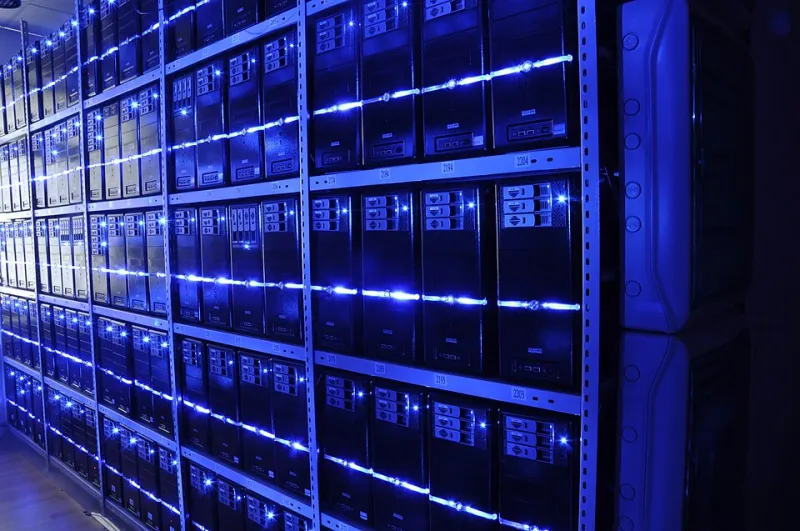
Photo: BalticServers.com, CC BY-SA 3.0, via Wikimedia Commons
In the spring of 2017, volunteers at the University of Pennsylvania's library worked through the night copying federal climate datasets onto hard drives. They were not acting on behalf of any agency. No directive instructed them to preserve the records. They simply understood, as archivists have long understood, that digital information survives only when someone decides it should.
The episode was nicknamed the Data Refuge project, and it marked the beginning of a persistent, largely unrecognized challenge in American public life: the fragility of government information in the digital age.
The Illusion of Permanence
Americans tend to assume that data collected with public money belongs to the public forever. The assumption is reasonable but mistaken. A dataset housed on an agency server exists at the pleasure of that agency's budget, leadership, and priorities. When programs are reorganized, websites are redesigned, or mandates shift, datasets can be moved, restricted, or removed without public notice.
Researchers have documented dozens of such disappearances over the past decade. Environmental monitoring series have gone offline mid-collection. Public health survey instruments have been retired before their successors were fully established. Census products that took decades to build have been reformatted in ways that broke long-term comparisons. Each individual loss seems minor. Collectively, they amount to an erosion of the evidence base on which policy, scholarship, and local planning depend.
Digital records differ from paper ones in a crucial respect. A paper document in a warehouse degrades slowly and predictably. A digital file can vanish instantly and completely, taking with it not just the data but the documentation, codebooks, and methodological notes that make it usable.
The Guerrilla Archivists
Into this gap has stepped an informal coalition that practitioners sometimes call guerrilla archivists. Librarians at land-grant universities have mirrored agency FTP servers. Graduate students have written crawlers that snapshot federal web pages on a weekly schedule. Nonprofit data trusts have negotiated agreements to hold copies of sensitive-but-public health statistics. The Internet Archive's Wayback Machine, for all its limitations, has become an accidental backup system for the administrative state.
These efforts share a common trait: they are almost entirely volunteer-driven and grant-funded, often on shoestring budgets. The people doing this work are highly skilled. They understand metadata standards, format migration, and the legal contours of the public domain. What they lack is institutional permanence — the very thing they are trying to provide for the data.
A mirrored server maintained by a doctoral student is not an archive. It is a postponement of loss.
Why Stewardship Organizations Belong in This Work
This is where the nonprofit and educational sectors have an underappreciated role to play. Stewardship organizations are, by mission and by structure, designed to hold things in trust across generations. Land trusts hold conservation easements. Historical societies hold municipal records. The same fiduciary logic applies to data: a public dataset is a common resource, and commons require custodians.
Several models deserve attention. University libraries, particularly those with federal depository status, could formalize data preservation as part of their collection mandate, the way they already handle government documents. Regional nonprofits could adopt datasets relevant to their geographies — a coastal stewardship group maintaining tide gauge and shoreline survey records for its own watershed. Consortia of small colleges could share storage infrastructure, distributing risk the way distributed networks distribute load.
The barriers are real. Data preservation requires ongoing funding, not one-time grants. Licensing and privacy constraints complicate the copying of some datasets. And there is a coordination problem: without agreed standards, dozens of well-intentioned copies can become an unfindable mess.
A Modest Agenda
Three steps would change the trajectory. First, funders should treat data stewardship as infrastructure, supporting multi-year preservation capacity rather than episodic rescue projects. Second, stewardship organizations should establish clear designation of which datasets fall within their custodial scope, so that responsibility does not fall through the cracks between agencies. Third, preservation efforts should prioritize documentation alongside data — a dataset without its codebook is a fossil without a label.
None of this is glamorous. It is the quiet, patient work that defines stewardship: maintaining something valuable not because the payoff is immediate, but because the alternative is irreversible.
The volunteers who copied climate data in Philadelphia understood something that deserves wider recognition. Public knowledge is not self-sustaining. It persists only through deliberate care, extended across years, by people and institutions willing to accept the obligation. America's data commons has survived this long on improvisation. It deserves better than that — and the organizations built for stewardship are the ones positioned to provide it.