The Long Silence: What a University Forfeits When It Shuts a Field Station
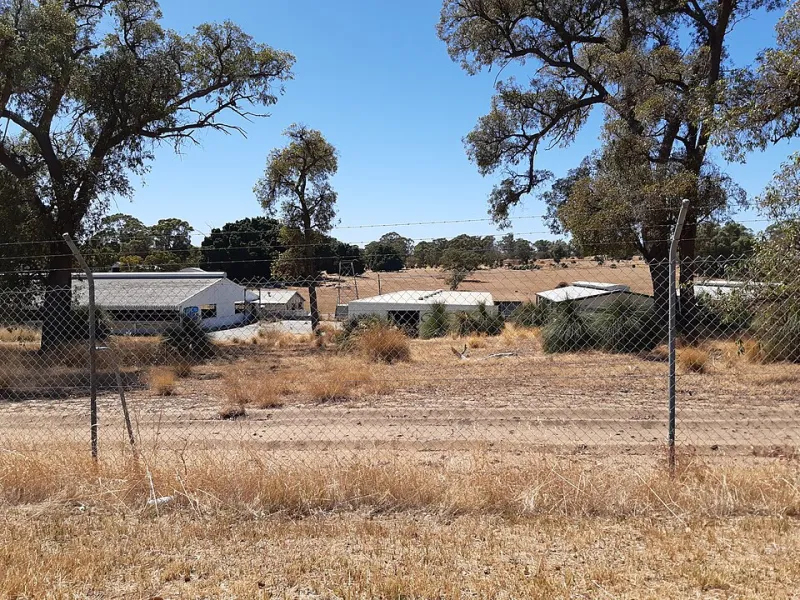
Photo: R. A. St. George, No restrictions, via Wikimedia Commons
The decision rarely arrives as an announcement. It arrives as a line item.
A spreadsheet circulates among provosts and budget officers. A building with modest square footage, seasonal staffing, and no tuition revenue is flagged for review. Within a semester, a field station that has logged stream temperatures every spring thaw since the Johnson administration is reclassified as 'non-core infrastructure.' The datasets, the community partnerships, the graduate students who learned their craft knee-deep in a watershed — all of it becomes collateral in a consolidation nobody was invited to discuss.
This pattern is playing out at public and private universities across the United States, and its costs are harder to see than the savings.
Why Field Stations Sit Poorly on a Balance Sheet
Field stations are, by the logic of modern university administration, inefficient. They occupy land rather than generate it. They serve small cohorts. Their most valuable output — long-term environmental monitoring — produces no patents and few citations in any given year.
What a spreadsheet cannot capture is continuity. Ecological science depends on records that only accrue value through duration. A thirty-year dataset of lake ice-on dates, phenology observations, or groundwater levels cannot be reconstructed retroactively. When monitoring stops, the record does not pause; it acquires a permanent gap that no future funding can fill.
The stations also anchor something less quantifiable: a university's presence in its surrounding region. Farmers, watershed councils, school districts, and county planners often know the field station long before they know the flagship campus. It is where the institution's mission becomes tangible.
One Station's Fight, in Outline
Consider a representative case, drawn from the experiences of several stations now fighting closure in the Midwest and Mountain West. A state university, facing a structural deficit, proposes mothballing its field station, citing $340,000 in annual operating costs.
The station's defenders assembled a counter-case built on three arguments. First, the replacement value of its monitoring records: no other institution within two hundred miles samples the same watershed. Second, the station's grant leverage — over a decade, external research funding attributable to the station exceeded its operating budget by a factor of four. Third, and most persuasively in the public arena, the community: a petition from township officials, a regional water authority, and three school districts that used the station for programming.
The station won a two-year reprieve, conditional on diversifying its revenue. That condition is the real story.
The Survival Playbook
Stations that have endured budget cycles share recognizable strategies:
- Alumni and friend cooperatives. Borrowing from the land trust model, some stations have established nonprofit affiliates that convert former students and local residents into recurring donors with governance voice. Predictable private revenue gives stations standing in budget negotiations.
- Municipal and utility contracts. Water districts, stormwater authorities, and county health departments need monitoring they cannot perform themselves. A contract for water-quality sampling converts a cost center into a service provider — and embeds the station in local governance.
- Corporate research leases. Companies with siting, permitting, or sustainability obligations sometimes lease station facilities or co-fund research. The model demands careful conflict-of-interest guardrails, but done transparently, it stabilizes finances without compromising independence.
- Consortium membership. Several threatened stations now share instrumentation, scheduling software, and even staff with nearby institutions, reducing fixed costs while preserving each site's distinct monitoring role.
None of these models is a substitute for institutional commitment. They are, however, proof that closure is a choice with alternatives — and that universities should be asked, publicly, to justify rejecting them.
What Stewardship Requires
RSSE's mission rests on the conviction that knowledge is a public trust. Field stations are among the plainest expressions of that trust: places where science is conducted slowly, locally, and in partnership with the people who live with the results.
For donors and academic leaders, the ask is straightforward. Universities should publish the criteria by which field stations are evaluated, involve affected communities before decisions are final, and treat long-term datasets as endowments — assets whose value compounds precisely because someone, every year, kept showing up.
The alternative is a long silence in the record, noticed only when it is too late to fill it.