While America Sleeps: The Quiet Labor Behind Our Always-On Research Stations
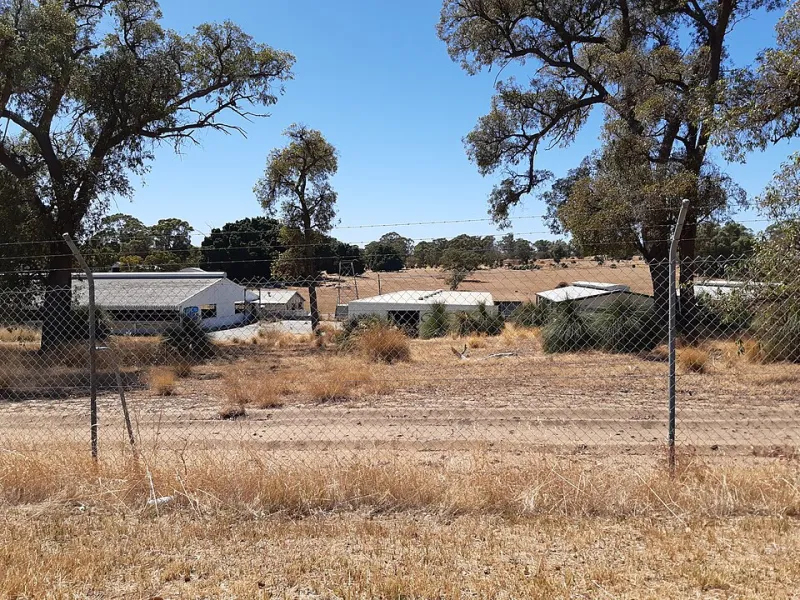
Photo: Calistemon, CC BY-SA 4.0, via Wikimedia Commons
At 2:47 a.m. on a January morning in Fairbanks, Alaska, a technician steps onto a frozen catwalk, checks a feed from an all-sky camera, and logs another hour of auroral activity. Twelve hundred miles southeast, a station manager in the Florida Keys wakes to a low-battery alert on a coral reef sensor array and begins troubleshooting by flashlight before the dive boat launches at dawn. Neither will make headlines. Both are, in a quiet way, holding up the scaffolding of American environmental science.
For donors and institutional partners, remote research stations present a paradox. They are indispensable to the long-term datasets on which climate science, fisheries management, and hazard forecasting depend, yet they are among the least visible and least celebrated assets in the nonprofit science landscape. Understanding how these facilities endure, and why they so often struggle, offers a master class in what sustained stewardship actually requires.
The Unseen Hours
Scientific discovery has a public relations problem, and the problem is night. Grant announcements, ribbon cuttings, and annual reports naturally gravitate toward daylight: the launch, the publication, the photographed handshake. But the data behind those moments is assembled incrementally, hour by hour, by instruments that do not respect business hours and by the people who keep those instruments honest.
Consider what runs overnight across the American research landscape. At high-latitude observatories, magnetometers and all-sky imagers record geomagnetic storms that can disrupt GPS systems and power grids thousands of miles away. In the Florida Keys, underwater photometers track coral bleaching in near real time, feeding alerts to reef managers before damage becomes irreversible. Across the Great Plains and desert Southwest, eddy-covariance towers measure the exchange of carbon between grassland, forest, and atmosphere through every hour of every season, building the continuous records that satellite snapshots cannot replicate.
These operations share a defining characteristic: their value compounds with time. A single night of aurora data is a curiosity. Fifty years of it is a window into solar-terrestrial physics that no other record can provide. The same holds for stream gauges, seismic arrays, and phenology networks. Continuity is not a feature of this science; it is the science.
The Human Infrastructure
Instruments, of course, do not maintain themselves. Behind every long-running dataset stands a thin, often invisible layer of human labor: the station manager who drives two hundred miles to replace a failed hard drive, the graduate student who calibrates sensors in a snowstorm, the development director who spends more time writing continuation grants than new program proposals.
Interviews with staff at nonprofit-operated field stations across the country reveal a common pattern. The technical work, while demanding, is rarely the hardest part. The harder work is institutional: negotiating land access with ranchers and tribal nations, complying with an ever-shifting patchwork of federal permits, recruiting the next generation of technicians willing to live where housing is scarce and winters are long. One station director in the Rocky Mountain West described her role as "part scientist, part plumber, part diplomat" — a job description that appears with remarkable consistency from Alaska to Maine.
This human infrastructure is chronically undervalued in philanthropic decision-making. Funders are drawn to novelty: a new sensor, a new site, a new partnership. Yet the marginal scientific value of a new station often pales beside the value of keeping an existing one staffed, funded, and functioning for another decade.
What Donors Can Learn From the Long Game
For philanthropists and foundation program officers, the field station model offers at least three transferable lessons.
First, fund the boring parts. Batteries, boat fuel, broadband, salaries for the technician who notices when something drifts out of calibration. Overhead is not waste; in continuous-measurement science, overhead is the product.
Second, prize endurance over novelty. A twenty-five-year commitment to a single monitoring program will almost always outperform twenty-five one-year grants scattered across new initiatives. The research stations that have endured, from the Hubbard Brook Experimental Forest in New Hampshire to the network of reef sensors south of Miami, did so because at least one funder treated continuity itself as the deliverable.
Third, invest in the people who stay. Career technicians and station managers hold institutional memory that no database can capture — knowledge of which sensor reads low in freeze events, which trail floods in spring, which local partners need a phone call before a permit application. Retaining that knowledge is among the highest-return investments available to any science funder.
Stewardship in the Dark
RSSE's mission rests on the conviction that science, education, and stewardship reinforce one another, and nowhere is that interdependence more literal than at the research stations that never close. They steward landscapes by watching them without interruption. They educate by hosting the students and early-career researchers for whom a week at a remote station is a formative experience. And they embody a civic virtue increasingly rare in American life: the willingness to do necessary work that no one will applaud until long after it is done.
The aurora technician in Fairbanks will log tonight's data whether or not anyone ever reads it. The reef sensors will keep transmitting through the small hours. Our collective task — as donors, as institutions, as citizens — is to make sure someone is still there in the morning to check on them.