Pressed Between Pages: How America's Dead Plants Are Answering Live Climate Questions
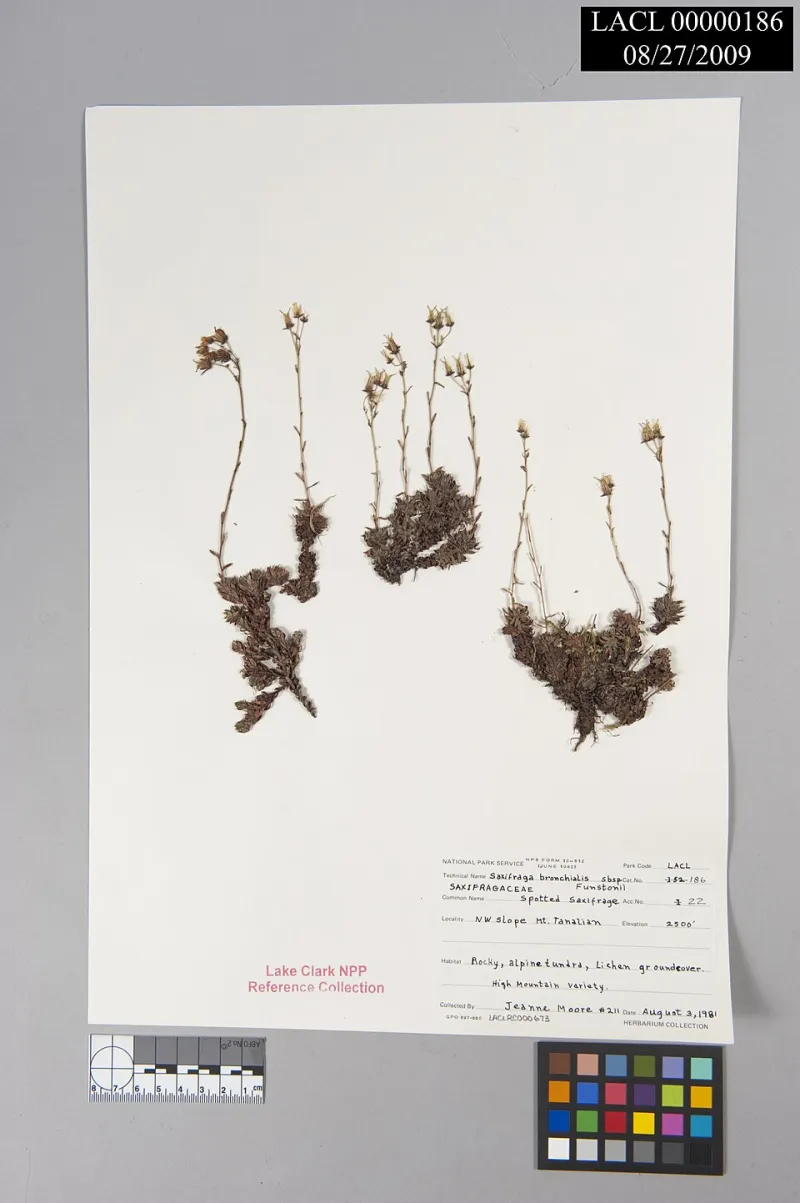
Photo: Frank Ruggles, Public domain, via Wikimedia Commons
In a basement vault at a Midwestern university, a botanist lifts a folio from a steel cabinet and peels back the cover. Inside lies a pressed mayapple, collected in rural Indiana on May 3, 1874, its roots still clinging to a thread of prairie soil. The collector could not have imagined that his careful notation — a date, a county, a Latin name — would one day serve as a data point in a national conversation about a warming continent.
Across the United States, roughly 60 million plant specimens sit in herbaria: university halls, federal research stations, natural history museums, and small historical societies. They are often described as archives. A growing body of research suggests they are something more active — an observational network built by hand, one specimen at a time, long before anyone thought to call it a dataset.
Reading the Season Through Dead Leaves
The utility of herbaria for climate science rests on a simple premise: a plant collected in flower was, by definition, flowering on that day, in that place. Multiply that premise across millions of specimens spanning two centuries, and patterns emerge that no satellite can replicate.
Researchers have used herbarium records to document earlier spring blooms across much of North America, with some species now flowering weeks ahead of their nineteenth-century schedules. In New England, comparisons between historical collections and present-day surveys have linked shifting bloom times to warming temperatures with striking precision. Studies of specimens from the Colorado Rockies and the Sierra Nevada have revealed how alpine communities respond differently to drought than their lowland counterparts — knowledge that directly informs which habitats conservation agencies prioritize.
The specimens also hold chemistry. Leaves pressed in 1890 carry isotopic signatures of the atmosphere they breathed. Others preserve pollen, fungal infections, and the herbivore damage of vanished ecosystems. Each sheet is a small environmental report filed by an amateur collector who never knew what they were filing it for.
A Network Built by Volunteers
It is worth pausing on who actually assembled this infrastructure. The majority of American herbarium specimens were collected not by professional scientists but by schoolteachers, farmers, club naturalists, and hobbyists — the same civic instinct that drives today's community science programs. In the nineteenth century, botanical collecting was a popular pastime, and local natural history societies exchanged specimens by mail the way modern volunteers exchange water-quality readings.
That lineage matters for how we think about stewardship today. The herbarium is not a relic of elite science; it is the product of sustained public participation, and its future depends on a comparable act of collective commitment.
The Race Against Decay
Here is the urgency. Pressed plants are perishable. Insect damage, humidity swings, and fading pigments threaten specimens daily, and many smaller collections — particularly those at small colleges and county historical societies — lack the climate-controlled storage and curatorial staff that large institutions maintain. Some regional herbaria have closed outright, their contents dispersed or discarded, taking with them local records that exist nowhere else.
Digitization offers a powerful countermeasure. Initiatives such as the National Science Foundation's SERNEC and iDigBio efforts have imaged millions of North American specimens and made them searchable online, allowing researchers to run analyses that once required visiting a dozen states. But digitization is not preservation — it is access. The physical specimen remains the primary source, and imaging a crumbling sheet does not stop it from crumbling.
Funding for collections care remains chronically difficult to secure. Grant programs favor novel research over maintenance, and donors understandably gravitate toward visible programs rather than cabinet repair. Yet the arithmetic is unforgiving: the marginal cost of stabilizing a herbarium is trivial compared with the irreplaceable value of what is at stake, and no amount of future technology can recapture a specimen that has decomposed.
Collections as Infrastructure
RSSE's mission centers on the conviction that science, education, and stewardship are interdependent enterprises. Herbaria sit precisely at that intersection. They are research infrastructure, yes — but they are also classrooms, where students learn taxonomy by handling the real thing, and community touchstones, where local historical societies hold the botanical memory of their own counties.
For donors and academic partners considering where to direct resources, the case is straightforward. Supporting herbarium conservation is not a nostalgic gesture toward the past; it is an investment in the observational capacity of the future. Every specimen stabilized today extends a two-century data record into the next century of climate research. Every digitized collection multiplies the number of researchers and students who can learn from it.
The botanist in the basement closes the folio and slides it back into the cabinet. The mayapple of 1874 will wait, patiently, for the next question someone brings to its door. Our task is simply to make sure the door still opens.