Perpetuity by Design: What Land Trusts Know About Keeping Promises That Outlive Us
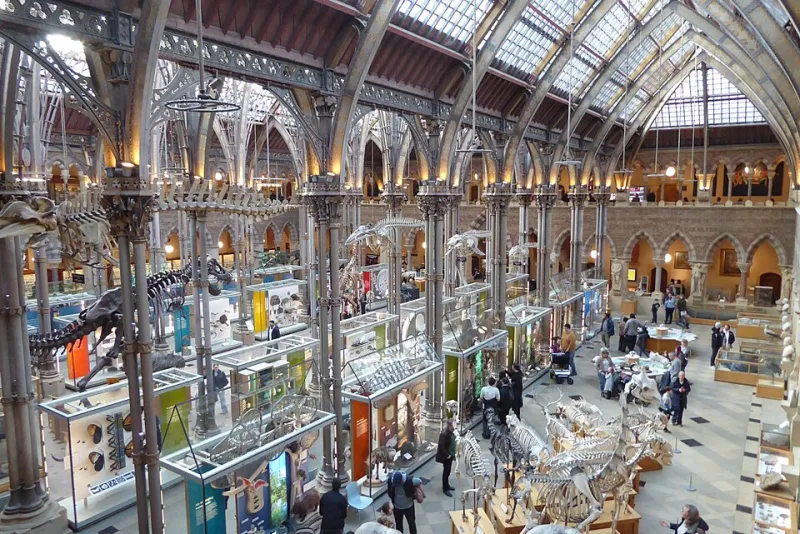
Photo: Philip Halling , CC BY-SA 2.0, via Wikimedia Commons
Every land trust in the United States operates under the same sobering premise: the promise of permanence is only as strong as the governance beneath it. When a family donates a conservation easement on a working farm in Vermont or a sagebrush flat in Montana, the trust is not making a metaphorical commitment. It is accepting a legal obligation that will be enforced long after every current board member, staff person, and donor is gone.
Compare that to the typical lifespan of a university collection, a long-term ecological dataset, or a research center. A museum pledges to steward its holdings; a laboratory promises to maintain decades of field measurements; a nonprofit commits to a community partnership. Then leadership changes, budgets tighten, and the promise quietly dissolves. The land trust model — binding legal permanence to community accountability — deserves a closer look from every academic institution and research nonprofit that claims to plan in centuries rather than fiscal years.
The Anatomy of a Durable Promise
Land trusts did not arrive at permanence by accident. The model rests on three interlocking mechanisms.
First, the legal instrument itself. A conservation easement runs with the land, binding future owners whether or not they agreed to it. The restriction is recorded, enforceable, and difficult to undo. Second, monitoring and enforcement capacity. Accredited trusts through the Land Trust Accreditation Commission must demonstrate that they possess the financial reserves and staff capacity to actually visit, inspect, and — if necessary — litigate. A promise without an enforcement budget is a press release. Third, and least discussed, community accountability. Local boards, public baselines, and transparent stewardship reports mean the trust cannot quietly abandon its obligations without neighbors noticing.
Each mechanism has a direct analogue for knowledge institutions.
Conservation Easements for Knowledge
Consider what a "knowledge easement" might look like. A university commits to maintaining a long-term research site — say, a forty-year stream gauge record in the Cascades or a decommissioned agricultural plot that has become an irreplaceable baseline for soil science. The commitment is recorded not just in a strategic plan but in a covenant attached to the property or the endowment gift itself, specifying minimum monitoring standards, data publication requirements, and conditions under which the obligation transfers if the institution cannot fulfill it.
The same logic applies to collections. Natural history museums hold specimens whose scientific value compounds over centuries; a beetle collected in 1890 is often the only record of a species' range before habitat loss. Yet collection budgets are perennially vulnerable because the people who benefit from that value have not yet been born. A perpetual care covenant — legally attached to the endowment funds that support a collection — would convert stewardship from a discretionary expense into an enforceable obligation, the way easement holders must maintain their monitoring capacity to retain accreditation.
Institutions Already Experimenting
The idea is not purely theoretical. A number of institutions are testing pieces of this framework.
Several university natural history collections have adopted permanent stewardship charters that specify, in binding policy, the conditions under which specimens may be deaccessioned and requiring independent review of any proposed dissolution. Some research data cooperatives, particularly in the hydrology and genomics communities, have written data sustainability covenants into their governance documents, obligating successor institutions to assume maintenance of long-term datasets if the original host can no longer support them — a functional equivalent of a backup grantee in land conservation.
Community foundations have also begun structuring gifts to research nonprofits with perpetual care provisions modeled on endowment-style easement funds, ensuring that a donor's support for, say, a coastal monitoring program cannot be redirected by a future administration without triggering defined safeguards.
The Accountability Gap
Legal permanence alone, however, is not the full lesson. Land trusts learned — sometimes painfully — that enforceability without transparency breeds distrust. High-profile disputes over easement terminations in the early 2000s prompted the accreditation movement precisely because the public had no reliable way to distinguish trustworthy stewards from careless ones.
Academic institutions face a parallel gap. Universities publish strategic plans and centennial visions, but rarely report on whether prior generations' stewardship commitments were honored. A practice of public stewardship accounting — an annual report on the status of long-term collections, datasets, sites, and community partnerships, with explicit acknowledgment of any obligations at risk — would do for research institutions what accreditation did for land trusts: create reputational consequences for quiet abandonment.
What Funders and Boards Should Ask
For donors and academic partners weighing long-term commitments, the land trust model suggests a practical checklist:
- Is the promise recorded in a legal instrument, or only in marketing materials and strategic plans?
- Is there a funded enforcement and monitoring capacity, with reserves calculated against the true long-term cost of care?
- Is there a named successor — an institution or coalition — obligated to assume stewardship if the original holder fails?
- Is there public reporting that makes abandonment visible to the communities who depend on the asset?
None of these mechanisms requires new science. They require the same discipline land trusts brought to conservation: treating permanence not as an aspiration but as an engineered system of law, money, and accountability.
The institutions that adopt this discipline will be the ones whose data, specimens, and partnerships are still generating discoveries in 2125. The rest will be footnotes in other people's research.