The Microscope in the Warehouse: An Argument for Repair as Science Infrastructure
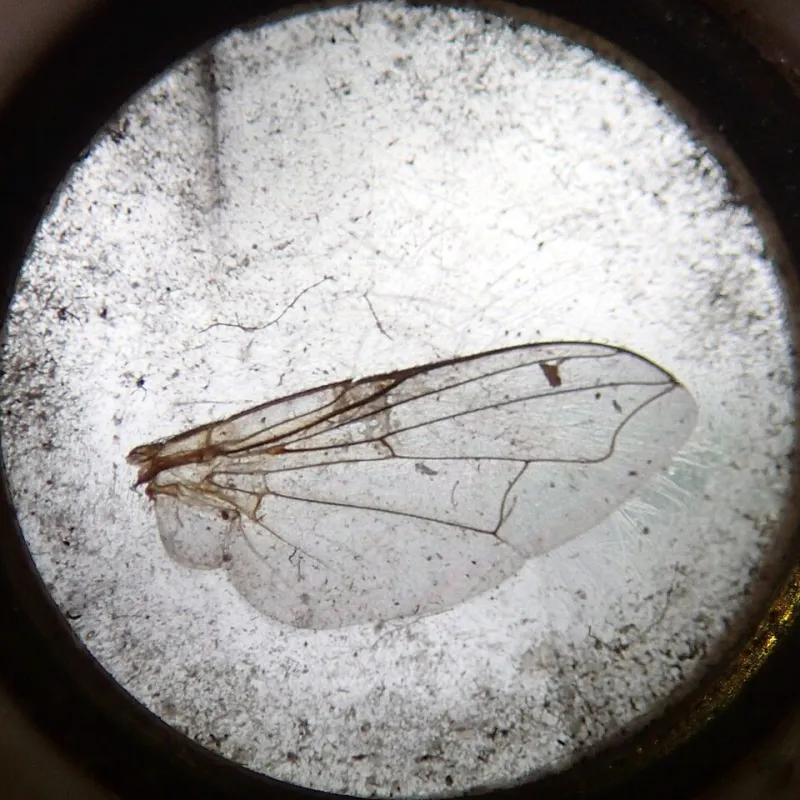
Photo: Robbie Sproule from Montreal, Canada, CC BY 2.0, via Wikimedia Commons
Somewhere on nearly every American campus there is a room with a padlock and no windows. Inside it are spectrophotometers with blown fuses, centrifuges with worn brushes, microscopes with seized focus racks, balances that were recalibrated into obsolescence, and oscilloscopes that a graduate student used twice in 2014. Some of it will be sold at auction for pennies. Some of it will be scrapped. Much of it will simply sit there, accruing depreciation and dust, because nobody has been assigned the job of deciding what it is.
Meanwhile, a few miles away, a high school physics teacher is writing a grant application for four microscopes, and a community makerspace is explaining to donors why a working analytical balance would change what its members can attempt.
This is not primarily a story about waste, though it is wasteful. It is a story about how American institutions account for instruments — and about a defensible argument that repairing, testing, and recirculating equipment should be treated as science infrastructure rather than as housekeeping.
Why Instruments Become Orphans
The reasons are structural, and none of them is anyone's fault in particular.
Procurement is judged on acquisition, not longevity. A grant that buys an instrument is a grant that produced something visible; a request for a maintenance contract, replacement parts, and a technician's hours is harder to defend in a competitive review. Service agreements expire. Manufacturers consolidate, discontinue lines, and stop stocking components. Software that drives an instrument stops running on a current operating system, and the instrument is pronounced dead when in fact only its interface is.
Accounting compounds the problem. Institutions depreciate equipment on a schedule that has little to do with physical condition, and a fully depreciated instrument can look, on a balance sheet, like an object with no remaining value — even when it works perfectly. Storage is cheap and unexamined; disposal requires staff time and signatures. The path of least resistance is the padlocked room.
The Case Against Buying New First
For a funder or a provost, the reflexive answer to a lab's equipment need is a purchase. That answer deserves more scrutiny than it usually receives.
A new instrument arrives with lead times measured in months, installation requirements, training obligations, and a warranty that will lapse precisely when the instrument becomes indispensable. A repaired instrument, by contrast, may be available in weeks, may already be familiar to the people who will use it, and may have a documented service history. It also carries a pedagogical dividend that new equipment rarely offers: someone had to understand it well enough to fix it.
That last point matters for education policy specifically. A student who diagnoses a faulty power supply on a used instrument has learned something about how scientific instruments work that no manual will supply. Repair is not a degraded substitute for acquisition. It is a different and often richer form of instruction.
Three Interventions That Cost Less Than They Sound
Repair cafés with a scientific specialty. The community repair movement has spent more than a decade demonstrating that volunteer fixers, spare parts, and a folding table can extend the life of ordinary objects. A research-institution variant is straightforward: a quarterly clinic where technicians, graduate students, and retired instrument specialists diagnose equipment that faculty and local schools bring in. The cost is staff time and a modest parts budget. The output is working equipment, trained volunteers, and a durable local skill base.
Surplus programs that test before they sell. Most university surplus operations function as warehouses with a cash register. A better model adds a bench: a technician who powers on each instrument, documents what works, and lists it with a condition note. Well-run state and federal surplus property programs already route equipment to schools and eligible nonprofits; institutions that invest in evaluation rather than mere storage get better placement, better compliance, and a genuinely useful public benefit.
Maintenance as a line item, not an afterthought. The most consequential reform is budgetary. Every equipment request above a defined threshold should carry a companion maintenance allocation — parts, service, and staff hours — for the life of the instrument. Institutions that adopt this practice will find that some purchases no longer make sense, which is the point.
What Institutions Owe the Public
It is worth being direct about the equity dimension. Public and land-grant institutions hold equipment purchased with public and philanthropic funds. There is no strong argument that the residual value of that equipment belongs exclusively to the unit that happens to hold the storage key.
The counterargument — that liability, data security, and calibration standards make recirculation risky — is real but manageable. It is addressed with screening, condition documentation, written transfer agreements, and clear statements about what a recipient should and should not expect from a donated instrument. Institutions already do this for computers. There is no reason microscopes should be harder.
A Practical Agenda
For donors, three requests are worth attaching to any equipment gift: a maintenance allocation, a named repair or surplus-evaluation technician, and a reporting requirement on where decommissioned equipment went. For institutions, a modest sequence: inventory the padlocked rooms, publish condition reports, fund a repair bench, and revise procurement rules so that lifetime cost is part of every request.
None of this is a substitute for new investment in science. It is what makes new investment go further. The instruments are already bought and paid for. The only remaining question is whether we intend to know what they are.