Teach the Dirt: A Modest Case for Soil-Health Plots on Every Campus
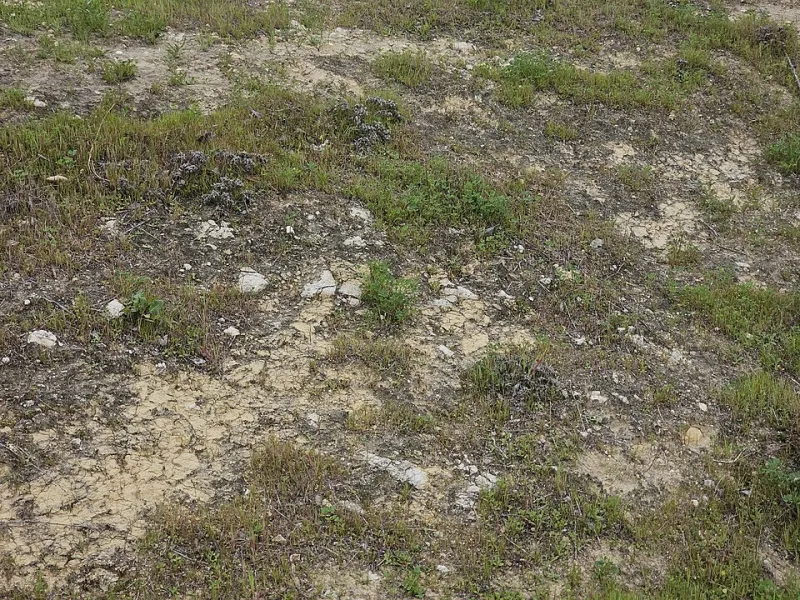
Photo: AragonChristopherR17Z, CC BY-SA 4.0, via Wikimedia Commons
Every campus has a lawn that does almost nothing. It is mowed, watered, fertilized, and largely ignored. It produces no data, hosts no classes, and asks nothing of the institution beyond groundskeeping. For a modest sum, a small portion of that lawn could become one of the most useful teaching spaces on campus: a soil-health teaching plot that turns the ground beneath students’ feet into a living laboratory.
The argument is not that every campus needs a farm. It does not. The argument is that soil is an unusually efficient teaching subject. It connects ecology, agriculture, chemistry, hydrology, climate policy, and public health. It can be studied with inexpensive tools. It produces visible results within a semester. And it gives donors something rare: a named, tangible legacy that grows more valuable as it is used.
The Lawn as a Missed Classroom
Most colleges already teach about soil, but often at a distance. Students read about carbon sequestration, nutrient cycling, and erosion in textbooks or analyze samples collected by someone else. That abstraction has a cost. Soil is variable, local, and stubbornly physical. Its behavior depends on texture, moisture, organic matter, compaction, microbial activity, and land-use history. A lecture can explain those factors. A plot can demonstrate them.
A teaching plot also addresses a quiet problem in science education: many students encounter research as a sequence of polished results rather than a process of observation and adjustment. A soil plot is never finished. It requires sampling, record-keeping, replanting, and revision. It teaches students that data are provisional and that stewardship is iterative. Those lessons are difficult to replicate in a classroom.
What a Teaching Plot Actually Requires
A useful plot does not need to be large. A rectangle of roughly twenty by thirty feet can support several beds, a control strip, a cover-crop demonstration, and a small tool shed. The essential elements are modest: decent soil or raised beds, a water source, a storage box for tools, clearly marked plots, and a simple protocol for sampling and record-keeping.
The design should follow the curriculum, not the other way around. If the biology department wants to study microbial respiration, the plot needs replicated beds and a consistent sampling schedule. If the agriculture program wants to compare cover crops, it needs enough space for side-by-side trials. If the chemistry department wants to test nutrient runoff, it needs a way to capture and measure water. A small planning committee can identify the highest-value experiments before anyone breaks ground.
Costs can be kept low. Many campuses already own shovels, soil probes, and drying ovens. Local extension offices, master gardener programs, and conservation districts are often willing to advise on design and maintenance. A startup budget in the low five figures is realistic for many institutions; an annual maintenance budget in the low four figures is not unusual. Compared with the cost of a mid-size lecture-hall renovation, the plot is inexpensive. Compared with its teaching value, it is a bargain.
Curriculum Integration Without the Grant Cycle
The most common failure mode for campus teaching plots is that they are built with grant money and then abandoned when the grant ends. The remedy is to embed the plot in existing courses rather than treating it as a special project. A soil-health plot can serve introductory biology, environmental science, soil science, agriculture, chemistry, statistics, and even writing courses. It can support independent research, capstone projects, and summer internships.
The key is to assign responsibility in the curriculum, not just in a memorandum of understanding. If three courses use the plot every semester, it becomes part of the academic schedule. If a student club adopts it as a service project, it gains continuity between semesters. If a faculty member coordinates the plot as part of their teaching load, it has an advocate. Grants can help with startup costs, but the long-term budget should live in the institution’s operating plan.
Maintenance Is the Pedagogy
Maintenance is where many campus plots fail. Grounds crews may see the plot as an untidy exception to their routines. Faculty may see it as a research site that should not be disturbed. Students may treat it as a club project with inconsistent labor. The result is a plot that is either overmanaged or neglected.
The solution is a clear, written agreement among facilities, faculty, and students. Who mows the surrounding lawn? Who waters during dry spells? Who repairs the fence? Who decides when a bed is replanted? Who keeps the records? These questions should be answered before the first seed is sown. Maintenance should be treated as part of the pedagogy, not as an obstacle to it. Students who learn to care for a plot learn something about stewardship that no lecture can supply.
A Named Legacy That Grows
For donors, the soil-health teaching plot offers a form of recognition that is both modest and durable. A named plot can honor a family, a retired professor, or a community leader without requiring a new building. An endowment for maintenance—even a small one—can keep the plot productive long after the initial gift is forgotten. A named internship or summer fellowship can support the student labor that makes the plot useful.
The pitch should be honest. This is not a monument. It is a working space that will change with the seasons and the curriculum. Its value lies in use, not permanence. But that is precisely what makes it a meaningful legacy. A donor who funds a teaching plot is not buying a plaque. They are underwriting a place where students will learn to observe, measure, and care for the ground beneath them.
The Cost of Waiting
Campus sustainability plans often speak in broad terms about carbon, resilience, and community engagement. A soil-health teaching plot is a small, concrete way to make those abstractions teachable. It does not require a new building, a large endowment, or a decade of planning. It requires a patch of lawn, a few committed faculty, a grounds crew willing to collaborate, and a donor who understands that some of the most valuable infrastructure on campus is only a few inches deep.
In 2026, as institutions face pressure to demonstrate educational value and responsible stewardship, the case is straightforward. Teach the dirt. Let students see what happens when the lawn becomes a laboratory. The harvest is not only vegetables or cover crops. It is a generation of graduates who understand that knowledge begins with attention to the ground.