Rooted in the Curriculum: How a 1912 Schoolhouse Greenhouse Outlasted a Century of Reform
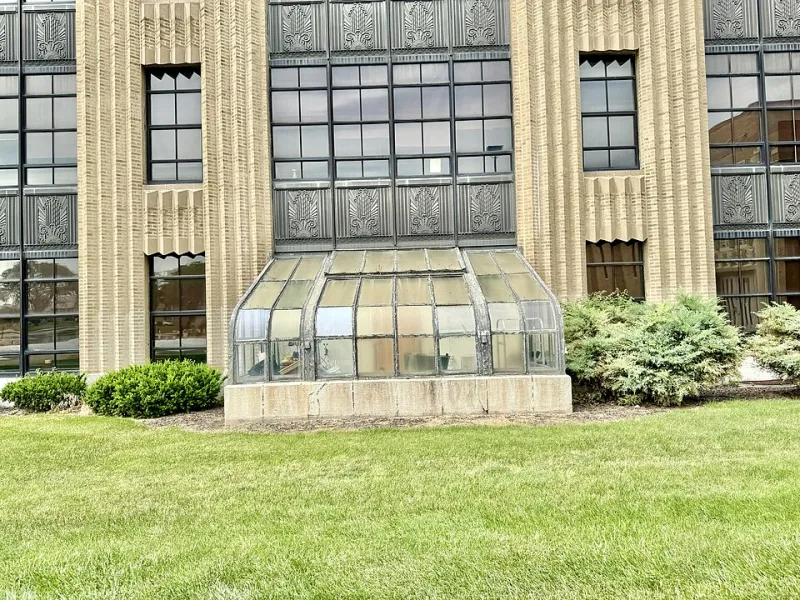
Photo: w_lemay, CC BY-SA 2.0, via Wikimedia Commons
Behind a brick elementary school in the Midwest, a glass-paneled greenhouse has been raising seedlings since before the United States entered the First World War. Its boilers have been replaced, its glazing reglazed, its student cohorts turned over roughly eight generations — but the structure has never stopped functioning as a classroom. It is one of a small but instructive group of teaching gardens and school greenhouses built during the school-garden movement of the 1900s and 1910s that remain in active educational use today.
Their survival is not an accident of nostalgia. It is a case study in how physical infrastructure, when designed to be maintained rather than merely inaugurated, can anchor hands-on science education across a century of administrative churn.
A Movement That Mostly Vanished
The school-garden movement once commanded national attention. At its peak, thousands of American schools maintained plots, arbors, and glasshouses, with federal encouragement flowing through the Bureau of Education and, later, the victory-garden campaigns. Civic boosters framed gardens as instruments of character formation and practical literacy; educators saw them as laboratories where observation, measurement, and hypothesis could be exercised on living material.
Most of that apparatus is gone. Gardens were paved for parking; greenhouses were decommissioned when heating budgets tightened or when a superintendent with different priorities arrived. The survivors tend to share identifiable traits: a dedicated — often volunteer — caretaker lineage, a physical structure substantial enough to resist deferred maintenance for a decade or more, and early bylaws or deed arrangements that tied the garden to the school's mission rather than to any single grant or principal.
What the Oral Record Shows
Interviews with retired teachers, alumni, and current garden coordinators at several surviving sites reveal a consistent pattern. The gardens that endured were rarely the ones with the most enthusiastic launch. They were the ones with redundancy: a friends-of-the-garden association predating formal STEM funding, maintenance responsibilities written into custodial job descriptions, and seed exchanges with local universities that kept institutional memory alive across staff turnover.
One coordinator described the arrangement plainly: the greenhouse belonged to the building, not to the principal. When leadership changed, the garden stayed. When a curriculum framework shifted, the garden adapted — hosting ecology units in one decade, nutrition education in the next, and climate-science data collection in the most recent. The structure's permanence made the pedagogy flexible rather than the reverse.
Lessons for Districts Building Today
Districts now investing in place-based science education — outdoor classrooms, school farms, weather stations, riparian study sites — would do well to study why the centenarians survived. Several principles emerge.
Build for the third superintendent. Programs tied to a founding champion frequently dissolve within a few years of that person's departure. Infrastructure with a maintenance line item, a named stewardship committee, and written operating procedures survives transitions that end enthusiasm-based programs.
Fund the unfundable. Grants routinely cover ribbon-cuttings but rarely boilers. The surviving greenhouses persisted because someone — a Rotary club, a garden society, an alumni donor — assumed responsibility for the unglamorous capital needs. Funders seeking durable outcomes should treat endowment-style support for maintenance as core program funding, not an afterthought.
Let the infrastructure serve many curricula. A greenhouse that exists solely for a single fourth-grade unit is fragile. The survivors functioned as shared civic infrastructure — hosting after-school clubs, community harvest programs, and elder education — which built the broad constituency that defended them during budget fights.
Document stewardship as seriously as outcomes. The oral histories behind these surviving sites are often the only record of how they were kept alive. Districts should treat maintenance logs, caretaker succession plans, and partnership agreements as part of the educational record, preserved with the same care as assessment data.
The Unheralded Backbone
Experiential learning is frequently discussed as a pedagogical philosophy. The century-old greenhouses suggest it is equally a question of engineering and governance. Hands-on science requires a place — literally, a heated, glazed, insured, maintained place — and the durability of that place determines whether the philosophy survives its founders.
For philanthropies, university partners, and school boards weighing investments in outdoor education, the oldest teaching gardens in the country offer a quiet benchmark: the most successful experiential science programs of the last century were not the best funded or the most innovative. They were the ones built to outlast us. That is a standard worth designing toward — in glass, in soil, and in the bylaws that keep both tended.