Budgeting for Wonder: The Line Item Philanthropy Keeps Forgetting
Photo: Benjamin Ellis, CC BY-SA 2.0, via Wikimedia Commons
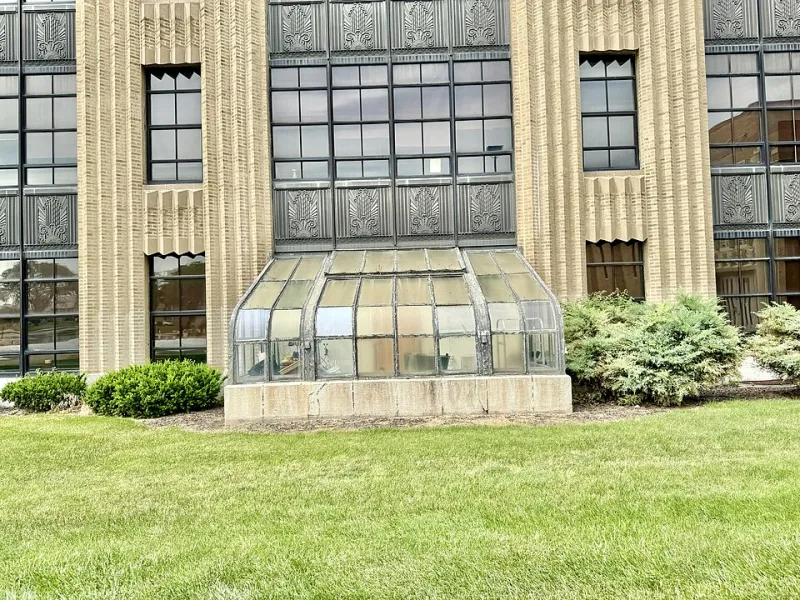
Walk through the donor recognition wall of nearly any American research university or independent institute and you will find the same litany: the named laboratory, the endowed lecture hall, the climate-controlled archive, the renovated greenhouse. American philanthropy has proven itself remarkably generous when the deliverable is something you can put a plaque on.
What you will rarely find honored — or even budgeted — is the afternoon a researcher spent reading outside her field, or the semester a land-grant faculty member was deliberately shielded from teaching loads to follow an inconvenient observation down a rabbit hole. This is the unfunded infrastructure of discovery, and it is quietly starving.
The Facility Trap
Capital campaigns succeed for structural reasons. Buildings photograph well. Naming opportunities create legible legacies. A gift of two million dollars for a laboratory addition can be tracked, audited, and celebrated at a ribbon-cutting with complete confidence that the money did what it said it would.
Thinking time offers no such assurances. When a foundation funds a scientist to simply wonder, the outcomes are probabilistic and deferred. Some of those hours will yield nothing measurable. This makes trustees nervous, and it makes grant accountants uneasy. So the line item gets squeezed — first informally, then structurally — until researchers are writing proposals engineered around guaranteed deliverables rather than genuine uncertainty.
The costs of this caution are not hypothetical. The history of American science is a history of productive detours: Barbara McClintock's decades on maize genetics, sustained by an unusually patient institutional home at Cold Spring Harbor; the long, unglamorous soil surveys at land-grant institutions that only later revealed their predictive value for a changing climate. These were not the products of funded deliverables. They were the products of protected attention.
What Protected Inquiry Actually Costs
Here is the uncomfortable arithmetic. A mid-career researcher at a public university might carry a teaching load, two grants, and a departmental committee rotation. The marginal cost of buying back one day per week for unstructured inquiry — through course release, research assistant support, or a modest sabbatical supplement — is often less than five percent of what the same donor would spend on equipment that researcher will use.
Yet equipment is fundable and time is not, because time resists the accountability frameworks philanthropy has built. Program officers ask: how do we report on wandering? What metric captures a question that changed everything three years after it was asked?
The answer is that we stop pretending wandering is unmeasurable and start treating it the way we treat any long-horizon asset. Land trusts learned this lesson decades ago: stewardship obligations do not fit neatly into annual reporting cycles, so they built vehicles — endowments, monitoring funds, perpetual covenants — designed for timescales longer than a grant period. The same institutional imagination can be applied to inquiry.
A Framework for Program Officers
For funders willing to experiment, evaluating proposals for what might be called productive wandering does not require abandoning rigor. It requires asking different questions:
Track record of curiosity. Has this researcher or team previously converted unstructured exploration into unexpected results? Look for evidence of pivots, cross-disciplinary collaborations, or publications that began as side observations.
Proportionality. Is the protected time a reasonable share of the budget — say, ten to twenty percent — rather than an open-ended slush fund? Vague requests for 'exploration' deserve scrutiny; a defined course release with a reporting narrative does not.
Reflection architecture. Does the proposal include lightweight mechanisms for capturing what was learned — lab notebooks, seminar series, internal working papers — even when nothing publishable emerges? The point is accountability to the process, not punishment of null results.
Institutional commitment. Is the home institution willing to shield the time, or will committee assignments and service obligations simply refill the calendar? A funder's inquiry dollars are only as durable as the dean's willingness to defend them.
Writing Wonder Into the Bylaws
None of this requires philanthropy to abandon accountability. It requires expanding the definition of infrastructure to include the human capacity for sustained attention. A foundation that funds a building but not the hours inside it has purchased a vessel without provisioning the voyage.
The organizations RSSE serves — research institutes, educational nonprofits, stewardship organizations — should take a first practical step: add a protected inquiry line to the next grant budget, however small, and describe it in plain language. Donors who might hesitate at 'unstructured research time' often respond well to an honest framing: this is the line item where your next unexpected breakthrough is being given room to happen.
Buildings house science. They do not produce it. If the sector's stated ambition is breakthrough rather than merely occupancy, then curiosity deserves what every other critical asset already has: a budget, a steward, and a promise that it will still exist next year.