Talking About the Water Without Talking About the Fight: Coastal Science in Skeptical Communities
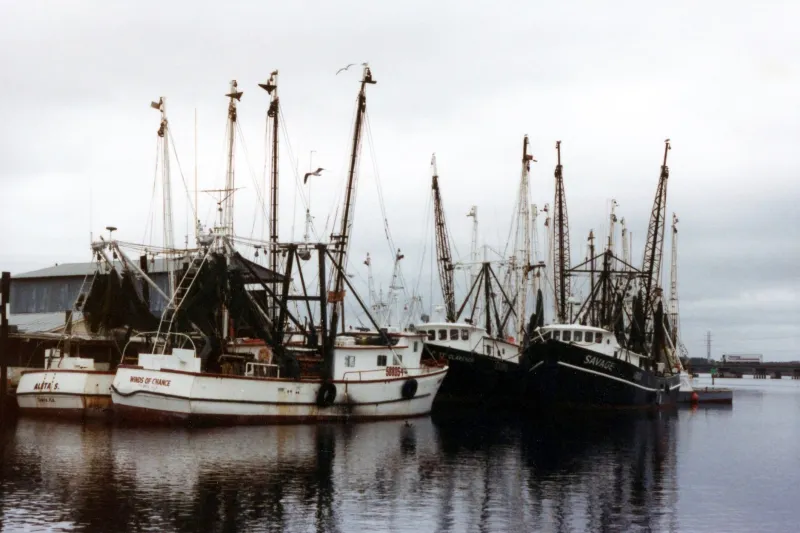
Stand on a working dock in Bayou La Batre, Alabama, or Port Aransas, Texas, and you will hear less skepticism about the water than about the words used to describe it. Shrimpers can tell you the season has shifted. Oyster farmers can map the decline of their beds with the precision of any survey. What many of these communities reject is not observation — it is the framing that arrives packaged with it.
For researchers and communicators working along the Gulf and rural Atlantic shorelines, this distinction is not a rhetorical nicety. It is the difference between a filled community meeting and an empty one.
The Vocabulary Problem
The term "climate change" now functions in much of rural coastal America as a signal of tribal affiliation rather than a description of physical processes. Surveys from the Yale Program on Climate Change Communication have long shown a gap between Americans who accept the phenomenon and Americans who believe it is discussed in terms relevant to their lives. Along working shorelines, that gap widens into active resistance when the vocabulary precedes the evidence.
Communicators who have earned trust in these communities tend to describe the same findings without the contested label. Rising water becomes flooding that closes the only road to the marina. Warming waters become the northward drift of red snapper and the collapse of a shrimp season. Acidification becomes the hatchery's oyster spawn failing in a bad year. The science is unchanged; the entry point is local, material, and economic.
Leading With the Ledger
The most durable frame, practitioners report, is financial. Coastal residents may distrust projections, but they trust an insurance quote. Homeowners along the Gulf have watched premiums climb as insurers recalculated flood risk and, in some cases, withdrew from markets entirely. That experience — not a temperature chart — is what makes a conversation about coastal dynamics possible.
Consider the communicators who have made this work. Extension agents with the Sea Grant network, operating through land-grant universities across the Gulf states, have spent decades building credibility one conversation at a time. Their approach is instructive: they rarely open with global trends. They open with the boat ramp that needs raising, the septic systems failing after king tides, the tourism dollars that follow clear water and healthy beaches. The larger picture arrives only after the audience has established that the speaker understands what is at stake locally.
Fisheries science offers another instructive case. When researchers present stock assessments as management partnerships — co-designed with commercial fishermen, incorporating their catch data and dockside knowledge — participation and data quality both improve. The lesson generalizes: communities engage with science when they hold a stake in it, and skepticism softens when expertise is offered as a service rather than a verdict.
What This Means for Institutions
For research institutions and the funders who support them, the implications are structural as much as rhetorical.
First, communication budgets should fund presence, not just products. A glossy report mailed to coastal counties accomplishes little; a resident extension specialist who attends the Rotary lunch and the shrimp association meeting accomplishes a great deal over time. Trust is built at the speed of relationship, not publication.
Second, institutions should treat local economic data as a first-class scientific output. Valuing fisheries landings, mapping insurance exposure, quantifying tourism revenue tied to water quality — these analyses speak a language that transcends the polarization problem, and they frequently motivate policy conversations that explicit climate framing cannot.
Third, funders should measure communication success by durability of engagement rather than reach. A presentation that produces a standing community monitoring program is worth more than a viral video, particularly in places where media trust is thin and institutional trust is thinner.
A Humbling Discipline
None of this requires researchers to soften their findings or obscure their conclusions. It requires them to sequence the conversation: stakes first, evidence second, labels last — if at all. It also requires a measure of humility. Coastal communities hold generational knowledge of tides, storms, and fish behavior that no model fully captures, and communicators who acknowledge that knowledge open doors that credentials alone cannot.
The water does not care how we describe it. But the people who live beside it do — and if the goal is stewardship rather than spectacle, the description should start with their livelihoods, their insurance bills, and their children's beaches. That is not a concession to skepticism. It is the oldest rule of teaching: begin with what your audience already knows to be true.