Patient Capital for Living Shorelines: Rethinking How We Fund Ecological Restoration
There is a quiet mismatch at the heart of American environmental philanthropy. Ecosystems recover on decadal timescales; grants are awarded on annual ones. Nowhere is this tension more visible than along the nation's coastlines, where restoration projects are too often launched with celebration and abandoned in silence.
At RSSE, we believe stewardship should be treated as a science in its own right — one with its own evidence base about what makes institutional commitments endure. The record from two of the country's most closely watched coastal efforts offers a useful starting point.
Two Coastlines, Two Timelines
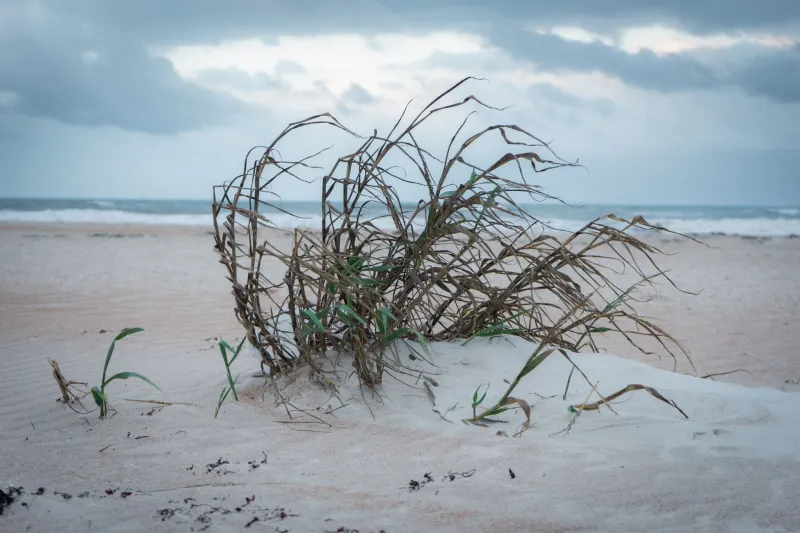
Along the Gulf Coast, dune restoration following the Deepwater Horizon disaster mobilized thousands of volunteers to plant sea oats and rebuild sand barriers that protect inland communities from storm surge. The science was sound and the volunteer energy genuine. Yet follow-up assessments have repeatedly found that plantings succeed or fail based less on the initial effort than on whether anyone returned in years two through five to replant, manage invasive species, and monitor sediment movement. Where local stewardship groups secured sustained funding, survival rates soared. Where one-time grants ran out, so did the dunes.
The Chesapeake Bay tells a more hopeful story. The multi-state restoration partnership there — spanning six states, the District of Columbia, and federal agencies — has persisted for four decades precisely because it was structured as a permanent commitment rather than a campaign. Nutrient reductions, underwater grass recovery, and oyster reef rebuilding have been uneven, and setbacks are real. But the governance architecture has outlasted political cycles, and measurable water-quality gains have followed.
A Framework for Patient Stewardship Capital
What distinguishes enduring projects from fragile ones? Three principles emerge.
First, fund the maintenance, not just the moment. Donors are drawn to ribbon-cuttings, but the marginal dollar is often most valuable in years three through ten, when attention has moved on. Structuring gifts as multi-year stewardship endowments — rather than discrete grants — aligns money with ecology.
Second, embed monitoring in the budget. Long-term data is what converts restoration from anecdote to science. University partners can supply that rigor, but only if monitoring is funded as a core deliverable, not an afterthought.
Third, invest in local institutions. The Chesapeake effort endures because it lives in standing organizations with staff, boards, and community accountability. Volunteer enthusiasm is renewable fuel, but it requires an engine.
Stewardship as a Discipline
None of this is glamorous, and that is precisely the point. The most consequential act in restoration ecology may be showing up in year six with a modest check and a monitoring plan. Donors and university partners who structure their commitments around generational outcomes — rather than annual reports — will find that coastal communities, and the ecosystems that sustain them, repay that patience many times over.
Stewardship is not a gesture. It is a discipline. Funding it that way is the first step toward results that last.