Where Knowledge Systems Meet: How Tribal-Academic Partnerships Are Rewriting American Conservation
For more than a century, the standard script of American conservation cast universities as the experts and Indigenous communities as subjects of study — or as obstacles to be managed. That script is being rewritten. From the Olympic Peninsula to the Nebraska Sandhills, Tribal nations and academic institutions are entering into genuine research partnerships, and the ecosystems they steward are measurably better for it.
At RSSE, we believe these collaborations represent one of the most instructive developments in contemporary environmental stewardship. They demonstrate that rigorous science and traditional ecological knowledge are not competing epistemologies but complementary ones — and they carry lessons for any funder serious about long-term ecological outcomes.
Restoring the Rivers of the Pacific Northwest
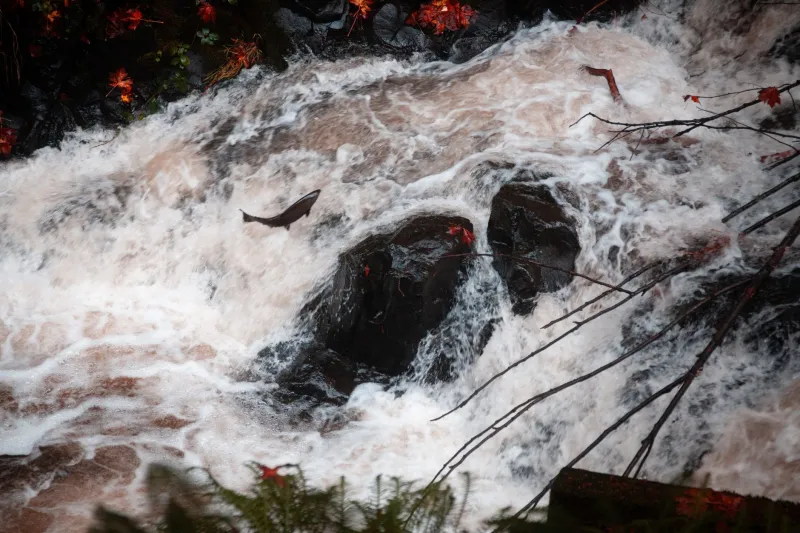
Nowhere is the shift more visible than in salmon recovery. The Elwha River on Washington's Olympic Peninsula, site of the largest dam removal in American history, has become a defining case. The Lower Elwha Klallam Tribe was not a consultant on that project; it was a driving force, and its fisheries biologists and hatchery managers have worked alongside researchers from the University of Washington and Peninsula College to track the river's astonishing recovery. Chinook salmon have already returned to waters they had been barred from for a century.
Similar dynamics shape the work of the Swinomish Indian Tribal Community, whose climate adaptation initiatives blend hydrological modeling with generations of observational knowledge about tides, shellfish beds, and estuarine health. Academic partners provide instrumentation and statistical power; Tribal knowledge provides the long record and the local nuance that no sensor network can replicate.
Grassland Revival on the Great Plains
Move east, and the same pattern emerges in an entirely different landscape. On the Fort Belknap reservation in Montana, the Assiniboine and Gros Ventre Tribes partnered with the Smithsonian's National Zoo and Conservation Biology Institute and Montana State University to reintroduce the black-footed ferret — once presumed extinct — and to restore prairie dog colonies, the ferret's essential habitat.
In Kansas, the Kanza (Kaw) Nation has been rebuilding its bison herd on ancestral lands, working with ecologists to document how managed bison grazing reshapes native tallgrass prairie. Research emerging from these efforts is informing rangeland management well beyond Tribal boundaries, offering a testable alternative to cattle-centric grazing models across the Flint Hills.
What Makes These Partnerships Work
Reviewing these projects, several conditions recur — and each carries a message for institutional funders.
Tribal sovereignty is the foundation, not a formality. Successful collaborations begin with the recognition that Tribal nations are governments and knowledge-holders, not stakeholder groups to be consulted after decisions are made. Data governance agreements, in which tribes retain ownership and control of research findings, have proven essential.
Funding must be patient. Watershed recovery and grassland restoration operate on decadal timescales, while most grants run two to three years. The most effective funders in this space have shifted toward multi-year, renewal-based support.
Capacity matters as much as outcomes. Direct investment in Tribal research infrastructure — laboratories, monitoring equipment, graduate fellowships for Indigenous students — compounds over time in ways that project-specific grants do not.
Knowledge exchange must run in both directions. The strongest partnerships treat traditional ecological knowledge as a body of expertise to be integrated on equal footing, with co-authorship and co-design rather than extraction.
A Legacy Worth Funding
The phrase "seven generations" — the Haudenosaunee principle of weighing decisions against their impact far into the future — is often quoted in philanthropy and rarely operationalized. These partnerships are among the few places where it genuinely is. A funder that supports Tribal-academic conservation is not merely purchasing ecological outcomes; it is investing in a governance model for knowledge itself, one in which science serves communities rather than the reverse.
The land, the water, and the generations to come will record the results. The evidence so far suggests they will be favorable.