Bringing the Laboratory to the Last Mile: Five Models Expanding Rural STEM Opportunity
Roughly one in five American students attends school in a rural district, yet these students remain markedly underrepresented in advanced science coursework and research opportunities. The barriers are structural rather than intellectual: smaller tax bases, difficulty recruiting specialized teachers, and geography that places the nearest research university hours away. The consequence is a national talent problem—capable students who never encounter the pathway to a scientific career because the pathway was never built in their zip code.
The encouraging news is that a set of practical, replicable models has emerged. Each depends on partnership—between universities, nonprofits, school districts, and philanthropists—and each has demonstrated results that merit broader investment.
1. Mobile Laboratories That Travel the Highway
Perhaps the most visible innovation is the traveling laboratory: a converted bus or trailer equipped with bench space, instrumentation, and a teaching staff that rotates among rural high schools. Programs in states such as North Carolina, Nebraska, and Montana have brought DNA sequencing, water chemistry, and materials science directly to school parking lots.
The strength of the model lies in its economics. A single mobile unit can serve dozens of schools across hundreds of miles, delivering equipment that no individual district could purchase. Students who might otherwise encounter a spectrophotometer only in a textbook perform authentic experiments within walking distance of their lockers.
2. Virtual Research Mentorship Networks
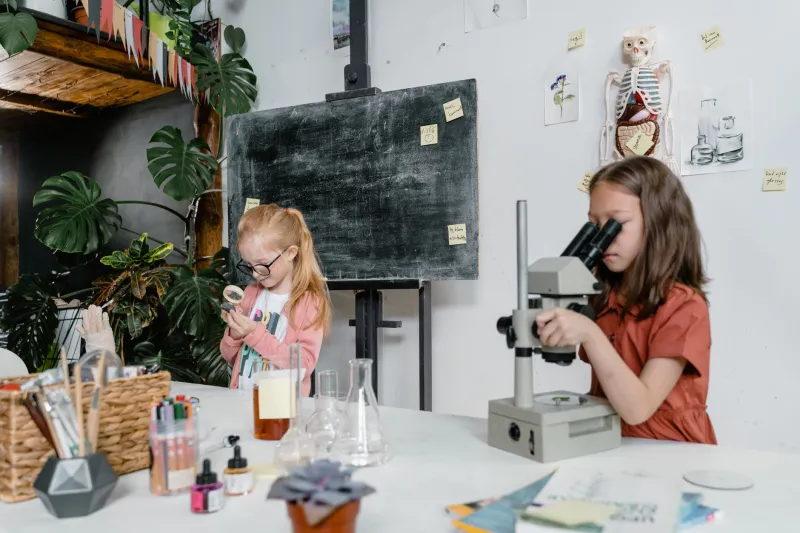
Distance no longer precludes mentorship. Several university systems now pair rural students with graduate researchers for semester-long projects conducted over video conferencing and shared data platforms. Students design mini-studies, analyze real datasets, and present findings to university audiences.
Evaluations of these programs point to a notable effect: students who complete a mentored research experience report substantially higher rates of STEM major declaration in college. For universities, the model also broadens recruitment pipelines into communities admissions offices historically struggled to reach.
3. Dual-Credit Science Through Regional Hubs
Rural high schools frequently lack the enrollment to justify offering calculus-based physics or advanced biology. Regional hub models solve this by consolidating instruction: a community college or university extension hosts laboratory courses that students from multiple districts attend, often with credit applying toward both high school graduation and a future degree.
Philanthropic support is particularly consequential here, because transportation—the hidden barrier—can be underwritten by grant funding. Programs that cover travel costs routinely see enrollment figures that surprise district administrators.
4. Citizen Science as Classroom Curriculum
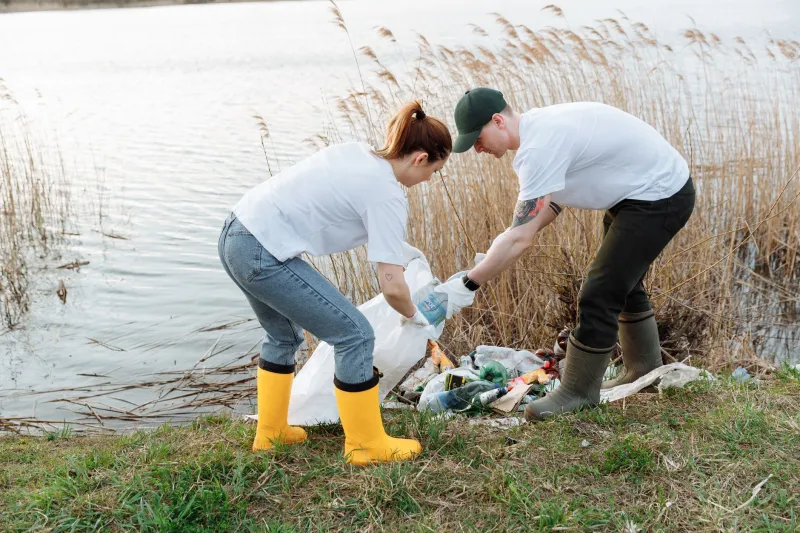
Not every research opportunity requires a laboratory. Rural classrooms are uniquely positioned to contribute to national citizen science efforts: monitoring stream health, tracking pollinator populations, participating in phenology networks. Because the surrounding landscape is the classroom, rural students often hold an authentic advantage over their urban peers.
Nonprofits that provide training, equipment kits, and data platforms convert this advantage into rigorous scientific practice. Students learn sampling design, quality control, and data interpretation—skills that transfer directly to college coursework—while producing observations that genuinely inform state environmental records.
5. Teacher Residencies That Build Local Capacity
Sustained change depends on educators. Teacher residency programs place rural science instructors in university research laboratories for summer fellowships, then support them during the academic year with curriculum development and refresher sessions. Each participating teacher returns to a classroom carrying current scientific practice, and each cohort influences hundreds of students over a career.
Because teacher turnover is a chronic challenge in rural districts, retaining and reinvigorating existing educators is often more cost-effective than recruiting new specialists from outside the community.
The Philanthropic Opportunity
What unites these five models is their replicability. None requires extraordinary resources; all require coordination and startup capital. A regional foundation can fund a mobile lab. A research university can open its mentorship network. A state agency can seed dual-credit transportation. The gap in rural science education is not a puzzle awaiting discovery—it is a set of proven solutions awaiting scale.
For funders and academic leaders seeking measurable impact, few investments offer a clearer return than ensuring that a student's scientific potential is not determined by the length of the school bus route.